Best Dog Raincoat for Rainy Walks: What to Look For

Rainy weather does not always mean your dog wants to stay indoors. Daily walks, bathroom breaks, and weekend adventures still need to happen even when the weather changes.
A well-designed dog raincoat can help keep your dog more comfortable during wet walks while allowing natural movement and adding practical protection for changing outdoor conditions.
But not every raincoat is designed the same way. Here are the most important features to consider before choosing one for your dog.
1. Look for Reliable Weather Protection
The main purpose of a dog raincoat is to reduce how much rain reaches your dog’s coat and body.
Look for a protective outer shell that provides useful coverage across areas that are most exposed to wet weather:
- Back
- Shoulders
- Chest
- Body sides
For everyday rainy walks, lightweight protection is often easier to wear and allows better freedom of movement than a heavy or restrictive full-body design.
2. Make Sure Your Dog Can Move Comfortably
Weather protection only works well if your dog can still walk, sit, turn, and explore comfortably.
A good raincoat should leave enough room around the shoulders, front legs, chest, and neck. Avoid designs that pull tightly when your dog moves.
Adjustable fastening points can help create a secure fit while still allowing natural movement, especially during longer walks or outdoor adventures.
3. Choose the Right Level of Coverage
Different dogs may benefit from different levels of rain protection.
Some dogs are comfortable with a lightweight rain shell that mainly covers the back and sides. Others may benefit from additional head and neck coverage during heavier rain.
A removable hood gives you more flexibility. You can keep it attached during wetter conditions and remove it when lighter coverage is enough.
A transparent rain visor can also provide extra coverage around the face while helping keep the dog’s field of view more open.
4. Reflective Details Can Help in Low-Light Conditions
Rainy weather often comes with darker skies and reduced visibility.
Reflective trim can be useful during:
- Early morning walks
- Evening walks
- Cloudy weather
- Rainy roadside walks
Reflective details do not replace proper lighting or safe walking habits, but they can add another practical feature to everyday outdoor gear.
5. Check for a Leash-Friendly Design
One feature that is easy to overlook is leash access.
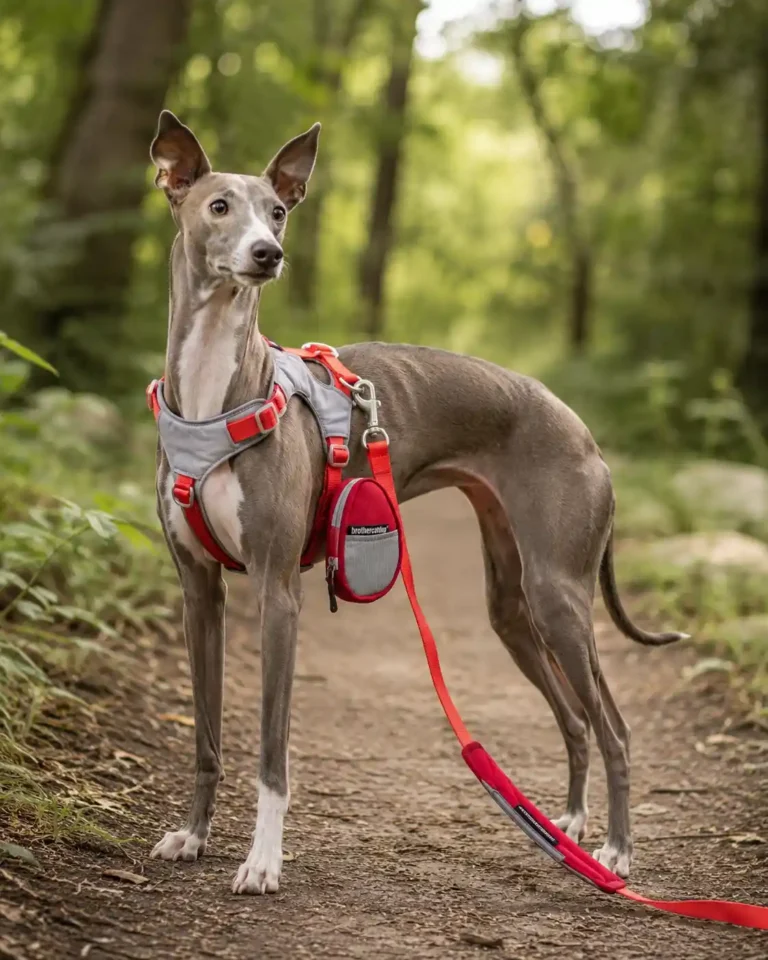
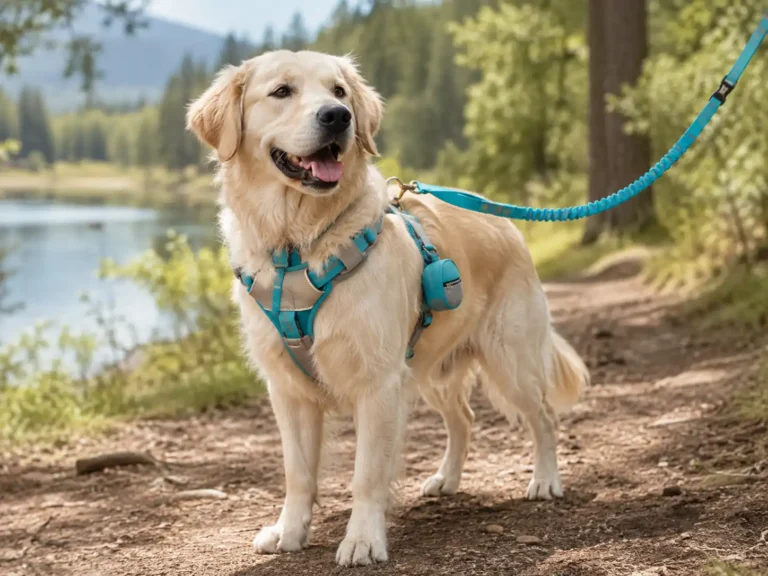
If your dog wears a harness underneath the raincoat, look for a leash-friendly back opening or attachment area that allows you to connect the leash without constantly adjusting the coat.
This is especially useful for dogs that already use a harness for daily walks.
6. Measure Your Dog Before Ordering
Choosing the correct size is one of the most important parts of buying a dog raincoat.
Do not rely only on breed or weight. Measure these three areas:
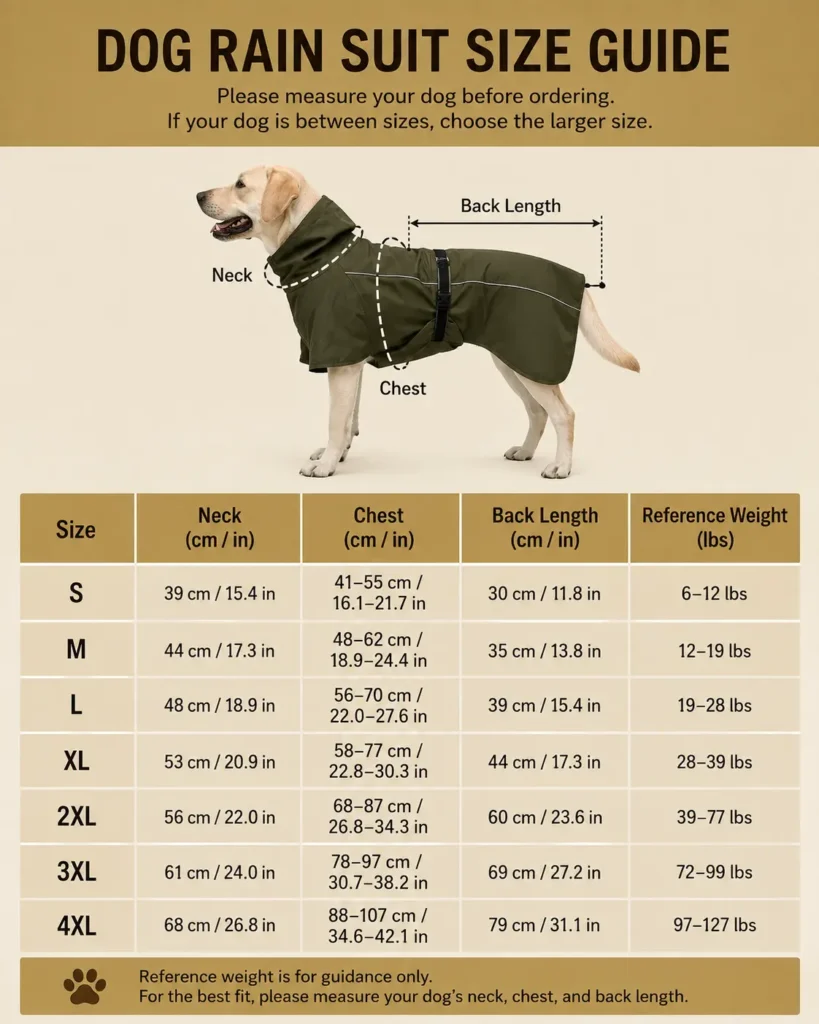
Neck
Measure around the base of the neck where the raincoat will sit.
Chest
Measure around the widest part of your dog’s ribcage.
Back Length
Measure from the base of the neck to the base of the tail.
If your dog falls between sizes, compare the chest measurement first and choose the option that allows comfortable movement without being excessively loose.
7. Lightweight vs. Full-Coverage Dog Raincoats
Lightweight Rain Shell
Best for:
- Daily neighborhood walks
- Light to moderate rain
- Dogs that dislike restrictive clothing
- Quick outdoor trips
Main advantages include easier dressing, lighter weight, natural movement, and simple packing for travel.
Full-Coverage Rain Suit
Best for:
- Muddy trails
- Heavier rain
- Long-haired dogs
- Owners who want more body and leg coverage
The best choice depends on your dog, local weather, and normal outdoor routine.
8. Which Dogs Can Benefit From a Raincoat?
A dog raincoat can be especially useful for:
- Short-haired dogs
- Smaller dogs
- Dogs that dislike getting wet
- Dogs that take frequent outdoor walks
- Dogs that spend time on wet trails or grass
- Dogs that become uncomfortable when their coat stays wet
Not every dog needs rainwear in every weather condition. The goal is simply to make outdoor time more comfortable when extra protection is useful.
A Practical Dog Raincoat for Everyday Outdoor Adventures
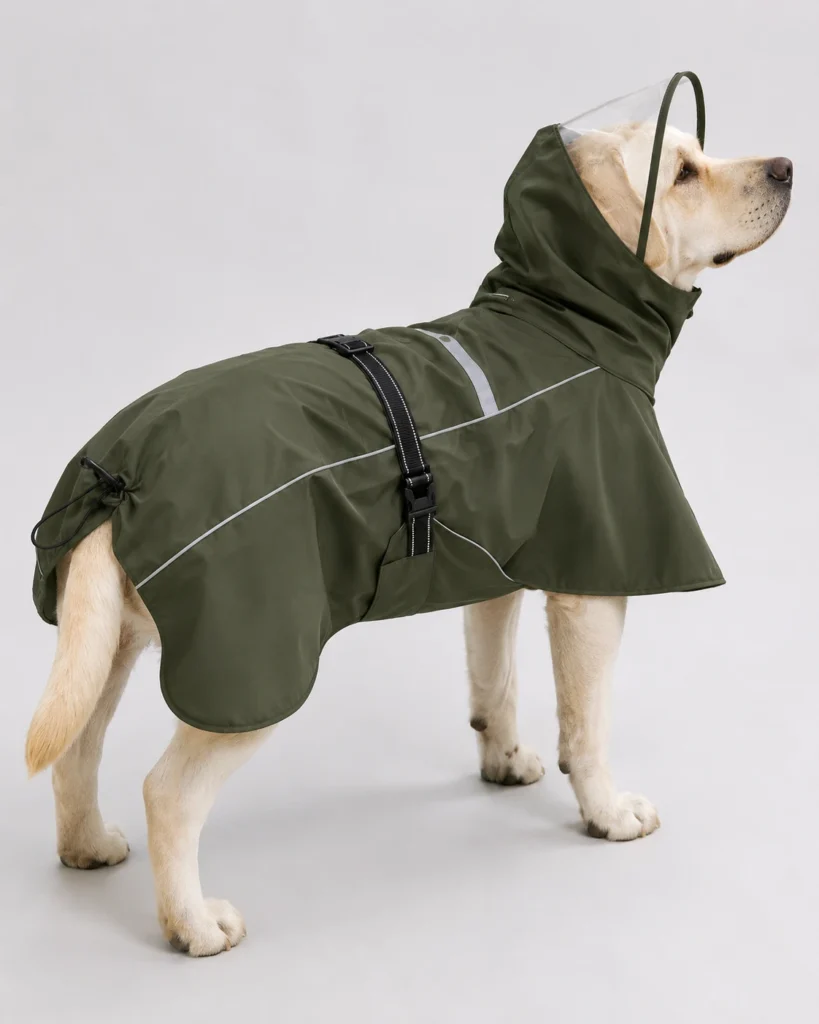
For everyday rainy walks, the CuddlPets All-Weather Dog Raincoat is designed around practical outdoor use.
- Protective wet-weather outer shell
- Removable hood
- Transparent rain visor
- Reflective trim
- Adjustable body fit
- Leash-friendly back attachment design
- Sizes S–4XL
- Army Green, Navy Blue, and Wine Red
It is designed for neighborhood walks, wet parks, changing weather, and everyday outdoor adventures.Explore more gear for wet-weather walks in our Rain & Weather Gear collection.
Frequently Asked Questions
Does my dog really need a raincoat?
Not every dog needs one. A raincoat can be helpful for dogs that dislike rain, have short coats, become uncomfortable when wet, or regularly walk outdoors in rainy conditions.
How should a dog raincoat fit?
It should stay secure around the body without restricting the shoulders, legs, or chest. Your dog should be able to walk, sit, and turn comfortably.
Should I size up if my dog is between sizes?
In most cases, choosing the larger size is safer when your dog falls between measurements, especially if the chest measurement is close to the upper limit.
Can my dog wear a harness under a raincoat?
Yes. Look for a raincoat with a leash-friendly opening or attachment area that allows access to the harness connection point.
Are dog raincoats useful for hiking?
They can be useful on wet trails or during changing weather, especially when combined with comfortable walking gear and sensible outdoor preparation.
Ready for the Next Rainy Walk?
Rain does not have to cancel every outdoor adventure.
The right dog raincoat can help make wet-weather walks more comfortable while keeping your everyday walking routine simple.
When choosing one, focus on weather protection, comfortable movement, correct sizing, leash access, and practical visibility.