How to Choose the Right Winter Coat for Your Dog

Choosing a winter coat for your dog is not simply about finding the warmest option.
Different dogs experience winter differently. Coat structure, body type, age, activity level, wind, moisture and the amount of time spent outdoors can all affect comfort.
A short-haired, single-coated dog may need additional protection much sooner than a thick, double-coated dog on the same walk. A calm, dry winter day can also feel very different from a windy, damp or snowy one.
That is why we do not recommend choosing a dog winter coat based on one fixed temperature alone.
Instead, start with four questions:
- What type of coat and body shape does your dog have?
- What weather conditions will you be walking in?
- Which parts of your dog need the most coverage?
- What practical problems do you usually encounter on winter walks?
At CuddlPets, our three core winter styles are designed around different levels of warmth, weather protection, coverage and everyday walking needs.
Does Every Dog Need a Winter Coat?
No.
Some dogs naturally handle colder conditions better than others.
Dogs with dense double coats already have substantial natural insulation, while short-haired, thin-coated, single-coated, small, lean, young, senior or more cold-sensitive dogs may benefit from additional protection sooner.
Dogs that sit closer to the ground may also experience more contact between their chest, belly and cold, wet or snowy surfaces.
The goal is not to dress every dog the same way.
The goal is to choose enough protection for your dog, the weather and the activity.
1. Start With Your Dog’s Natural Winter Protection
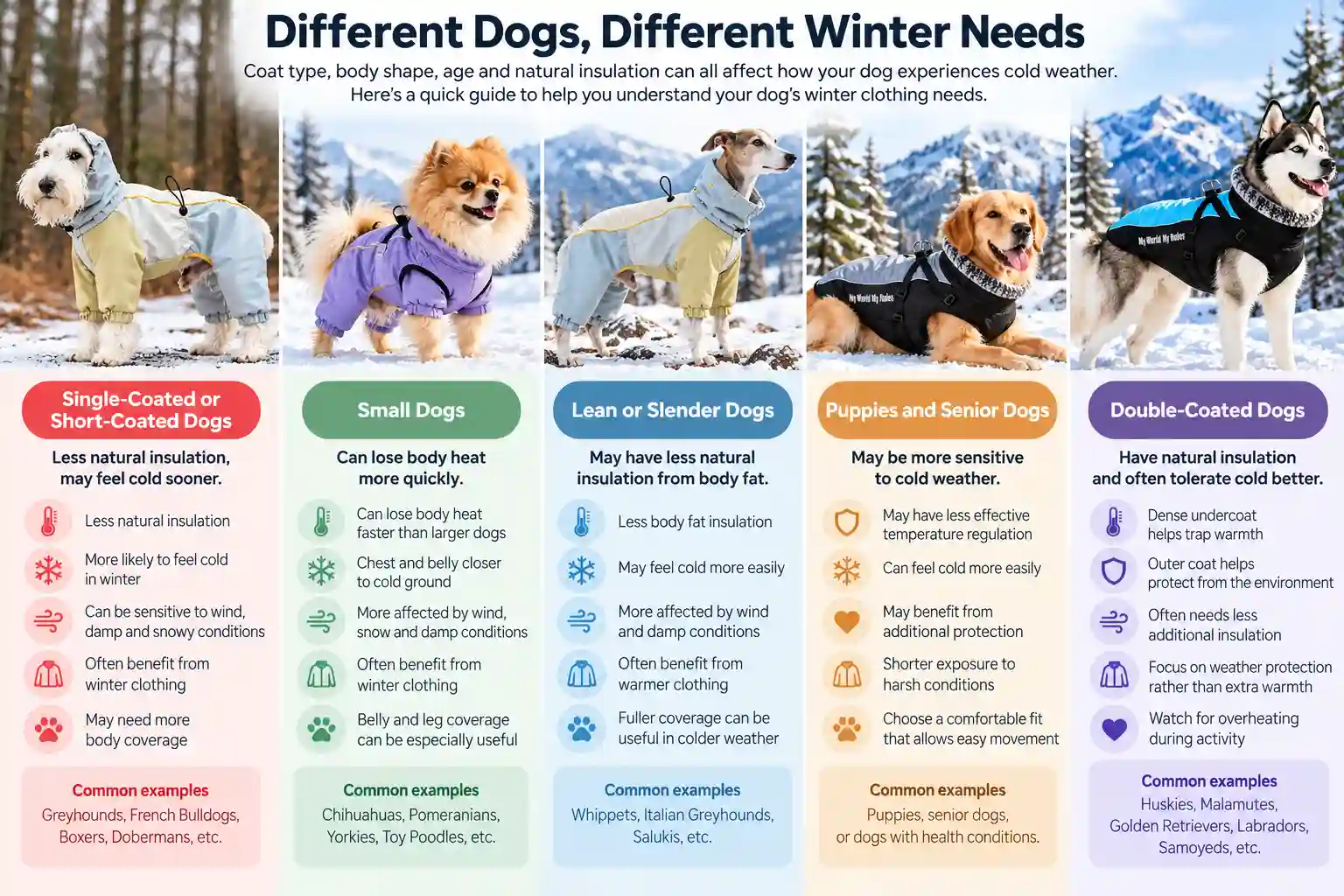
Before looking at insulation or jacket thickness, start with what your dog already has naturally.
Coat structure can make a major difference in how much additional winter protection a dog may need.
Single-Coated Dogs
Single-coated dogs have one main layer of hair rather than a dense insulating undercoat beneath the outer coat.
Because they generally have less natural insulation, many single-coated dogs can feel cold sooner during winter walks, especially in windy, damp or snowy conditions.
This does not mean every single-coated dog needs the same level of protection, but they are often more likely to benefit from a winter jacket than dogs with a dense double coat.
For these dogs, consider:
- Additional insulation for everyday cold-weather walks
- More body coverage when conditions become windy or damp
- Extra belly and leg coverage if those areas remain exposed
Short- or Thin-Coated Dogs
Short-haired and thin-coated dogs often have less natural protection between their skin and the outside environment.
They may benefit from additional warmth during ordinary winter walks and may need fuller coverage sooner as conditions become colder, wetter or more exposed.
Short-haired dogs with lean body types can be especially sensitive because they may have both less coat insulation and less natural body insulation.
Double-Coated Dogs
Double-coated dogs have two layers of natural protection.
A dense undercoat helps trap warmth close to the body, while the outer layer of guard hairs provides additional protection from the environment.
Many double-coated dogs therefore tolerate ordinary winter conditions better than short- or single-coated dogs.
That does not mean a double-coated dog never needs winter gear.
Wind, wet snow, rain, prolonged outdoor activity, age, health and individual cold tolerance still matter.
However, these dogs may need less additional insulation during ordinary walks and can sometimes become too warm if heavily bundled.
For double-coated dogs, think about weather protection and individual comfort rather than automatically choosing the warmest coat.
Small Dogs
Smaller dogs can lose body heat more quickly than larger dogs.
Their chest and belly may also sit closer to cold or wet ground.
They may therefore benefit from winter clothing during ordinary cold-weather walks, especially when conditions are windy, snowy or damp.
Lean or Slender Dogs
Lean dogs may have less natural insulation from body fat.
When combined with a short or thin coat, this can make winter protection especially useful during longer walks, windy conditions or damp weather.
Puppies and Senior Dogs
Young and older dogs may have more difficulty regulating body temperature than healthy adult dogs.
They may benefit from additional protection and more conservative exposure to harsh winter conditions.
If your dog has a medical condition or you are unsure how much cold exposure is appropriate, consult your veterinarian.
2. Quick Guide: Dog Type and Winter Clothing Needs
| Dog Type | General Winter Consideration |
|---|---|
| Single-coated dog | More likely to benefit from added insulation and weather protection. |
| Short- or thin-coated dog | May feel cold sooner and benefit from additional body coverage. |
| Short-coated + lean dog | Often benefits from both warmth and fuller coverage during colder walks. |
| Small or low-to-ground dog | Chest and belly coverage may become especially useful around snow, slush and wet ground. |
| Double-coated dog | Often needs less added insulation; focus on actual conditions and watch for overheating. |
| Puppy or senior dog | May benefit from extra protection and shorter exposure to difficult winter weather. |
3. Look Beyond Temperature
A number on a weather app does not tell you everything your dog will experience outside.
Wind, moisture, snow, ground conditions, activity level and the length of the walk can all affect comfort.
Wind
Wind can increase heat loss and make an otherwise manageable winter walk feel much harsher.
A dog that appears comfortable on a calm day may benefit from more protection when conditions become windy.
Moisture
Rain, sleet, wet snow and damp fur can make winter conditions feel colder.
Keeping the body warmer and drier can therefore be just as important as adding insulation.
Snow and Ground Contact
Dogs walking through snow may need protection around more than just the back.
The chest, belly and legs can collect moisture, slush, snow and outdoor debris, particularly in smaller dogs, long-haired dogs or during deeper snow conditions.
This is where fuller-coverage winter clothing can become especially useful.
Activity Level
A dog running, hiking or actively playing outdoors may stay warmer than a dog moving slowly or spending more time standing still.
This is another reason why the same coat will not feel the same for every dog in every situation.
4. What Dog Owners Actually Struggle With in Winter
Real winter walks often involve more than simply asking whether a dog feels cold.
Dog owners commonly run into practical problems involving exposed bellies and legs, harness compatibility, wet snow, fit and freedom of movement.
“My Dog’s Belly and Legs Are Still Exposed”
Many traditional dog jackets focus mainly on the back and upper body.
That may be enough for some dogs, but it can leave the chest, belly and legs exposed to cold air, wet ground, slush and snow.
This can matter more for short-haired dogs, lean dogs, smaller dogs and dogs that walk close to the ground.
If your dog regularly comes home with a wet belly, snow-covered legs or noticeably cold exposed areas, consider a style with more body and leg coverage rather than simply choosing a thicker back-only jacket.
“The Coat Works, but the Harness Setup Is a Hassle”
Winter layering can make normal walking gear more complicated.
A separate harness may need to sit under the coat, over the coat or pass through a leash opening.
Depending on the design, this can create extra bulk, cover the leash attachment point or make getting ready for a walk more time-consuming.
For owners who want a simpler everyday setup, a winter jacket with an integrated harness can make regular walks easier.
“I Want More Coverage Without Restricting Movement”
More coverage is not automatically better for every dog.
Four-leg suits and fuller-coverage winter gear need to fit carefully around the shoulders, chest and legs so the dog can still walk and move naturally.
A coat that is too tight may feel restrictive, while one that is too loose can shift during activity or allow the legs to move out of position.
Do not choose the fullest-coverage option simply because it sounds warmer. Choose it when your dog genuinely benefits from the additional coverage and the fit still allows comfortable movement.
“Cold Is Not the Only Problem — Wet Snow and Slush Matter Too”
Winter discomfort often comes from a combination of cold and moisture.
Wet snow, slush and damp ground can soak exposed fur around the belly, chest and legs.
Longer-haired dogs may also collect snow around the lower body during outdoor activities.
In these situations, a water-resistant outer layer and additional body coverage may be useful even when the temperature itself does not seem extreme.
Think About the Problem You Are Trying to Solve
Before choosing a winter coat, ask:
- Does my dog simply need an extra layer for everyday winter walks?
- Does wind, damp weather or light snow make my dog uncomfortable?
- Does my dog come home with a wet belly or snow-covered legs?
- Is putting a separate harness over or under the coat inconvenient?
- Does my dog need fuller coverage while still being able to move comfortably?
Once you identify the real problem, choosing the right winter style becomes much easier.
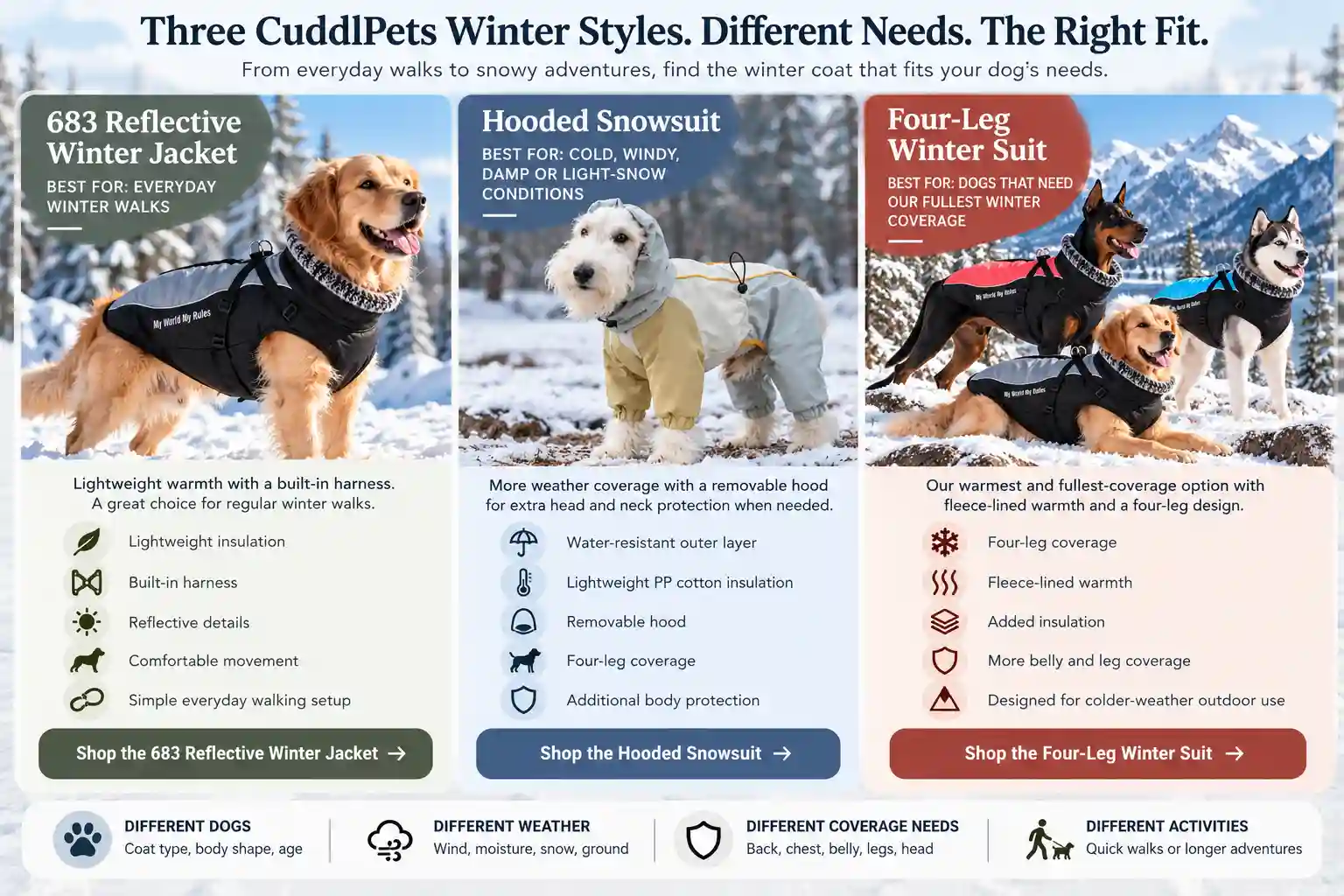
5. Which CuddlPets Winter Style Is Right for Your Dog?
683 Reflective Winter Jacket
Best for: Everyday Winter Walks
The 683 Reflective Winter Jacket is our most everyday-focused winter option.
It is designed for dogs that need an extra layer of lightweight warmth without full-leg coverage.
- Lightweight insulation
- Built-in harness
- Reflective details
- Comfortable movement
- Simple everyday walking setup
Consider the 683 if:
Your dog needs an extra layer for regular winter walks, but full-leg coverage is unnecessary.
Its built-in harness is particularly useful if you want to avoid the additional bulk and inconvenience of fitting a separate harness over or underneath a winter jacket.
Best fit in the CuddlPets lineup:
Everyday warmth + built-in walking convenience.
Shop the 683 Reflective Winter Jacket →
Hooded Snowsuit
Best for: Cold, Windy, Damp or Light-Snow Conditions
The Hooded Snowsuit provides more weather coverage than the 683 and includes a removable hood for additional head and neck coverage when needed.
- Lightweight PP cotton insulation
- Water-resistant outer layer
- Removable hood
- Four-leg coverage
- Additional body protection
Consider the Hooded Snowsuit if:
Your dog is more sensitive to cold or regularly walks in windy, damp or light-snow conditions where additional body coverage is useful.
Its four-leg design provides more protection from wet ground, snow and outdoor debris, while the removable hood gives you the option of additional head and neck coverage when conditions call for it.
Best fit in the CuddlPets lineup:
More weather coverage for cold, windy, damp and light-snow outings.
Four-Leg Winter Suit
Best for: Dogs That Need Our Fullest Winter Coverage
The Four-Leg Winter Suit is our warmest and fullest-coverage winter option.
Its insulated construction, soft fleece-lined warmth and four-leg design provide additional protection around the body, belly and legs.
- Four-leg coverage
- Fleece-lined warmth
- Added insulation
- More belly and leg coverage
- Designed for colder-weather outdoor use
Consider the Four-Leg Winter Suit if:
Your dog benefits from more complete winter coverage, especially around the body, belly and legs.
It is particularly relevant when a standard back-focused jacket leaves too much exposed, or when your dog regularly walks through colder, windy or snowy conditions where belly and leg coverage becomes more important.
Because fuller coverage also makes fit more important, check the Size Guide carefully and make sure your dog can walk and move comfortably in the suit.
Best fit in the CuddlPets lineup:
Our warmest and fullest-coverage option for dogs that genuinely benefit from additional body, belly and leg protection.
Shop the Four-Leg Winter Suit →
6. Quick Winter Coat Comparison
| Your Priority | Recommended Style |
|---|---|
| Everyday winter walks | 683 Reflective Winter Jacket |
| Lightweight warmth + built-in harness | 683 Reflective Winter Jacket |
| Simpler walks without layering a separate harness | 683 Reflective Winter Jacket |
| Cold, windy or damp conditions | Hooded Snowsuit |
| Removable head and neck coverage | Hooded Snowsuit |
| Light snow and increased weather coverage | Hooded Snowsuit |
| Extra belly and leg coverage | Four-Leg Winter Suit |
| More coverage for snow or wet ground | Four-Leg Winter Suit |
| Warmest option in our winter lineup | Four-Leg Winter Suit |
| Fullest body, belly and leg coverage | Four-Leg Winter Suit |
7. Why We Do Not Give One Exact Temperature Rating
It can be tempting to label a dog winter coat with a simple temperature range.
But temperature alone does not account for:
- Single coat vs. double coat
- Coat thickness
- Body size and body condition
- Age
- Health
- Activity level
- Wind
- Rain or wet snow
- Length of time outdoors
- Individual cold tolerance
That is why we prefer to describe our winter gear by coverage, insulation, weather conditions and intended use rather than promise one fixed temperature range.
Every dog handles cold differently. Coat structure, body type, age, activity level, wind and moisture can all affect comfort.
A winter coat can provide useful protection, but it should not be used as a reason to keep a dog outdoors longer than is comfortable or safe.
8. Watch Your Dog During Winter Walks
Even after choosing a coat, continue paying attention to your dog during the walk.
Consider ending the walk and moving somewhere warm and dry if you notice signs such as:
- Shivering
- Repeated paw lifting
- Reluctance to continue walking
- Whining
- A tucked tail
- Hunched posture
- Sudden anxiety or discomfort
Also watch for signs that your dog may be getting too warm, especially if they have a dense natural coat or are highly active.
Winter gear should support your dog’s comfort—not replace active observation.
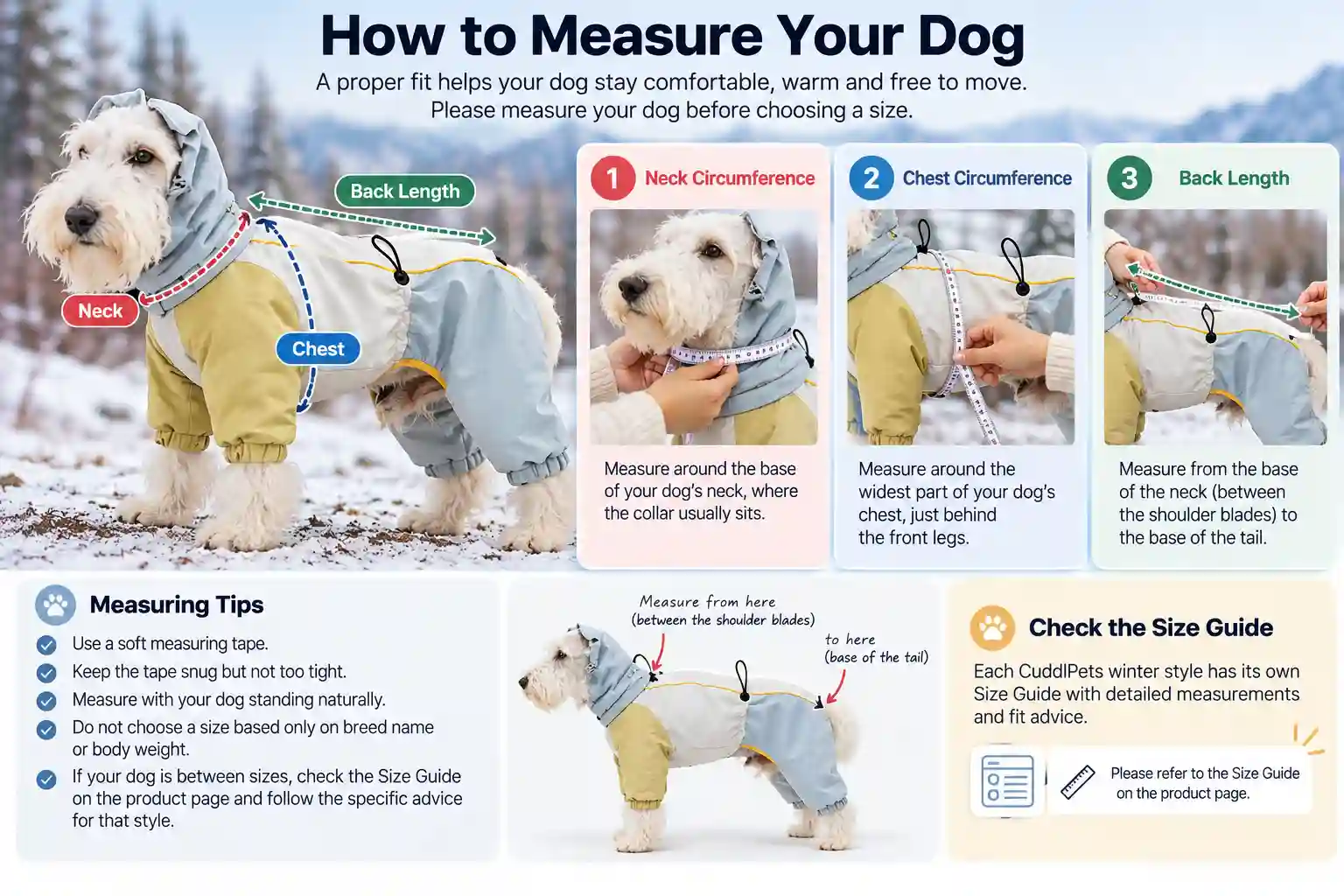
9. Do Not Forget Fit
A winter coat works best when it fits properly.
Before choosing a size, measure your dog according to the Size Guide on the individual product page.
Depending on the product, the most important measurements may include:
- Back length
- Chest or girth
- Neck circumference
Do not choose a size based only on breed name or body weight.
Dogs of the same breed and weight can have very different proportions.
If your dog falls between sizes, check the Size Guide on the specific product page and prioritize the measurements most important to that garment’s fit.
Which Winter Coat Should You Choose?
Choose the 683 Reflective Winter Jacket when you want lightweight everyday warmth and built-in walking convenience.
Choose the Hooded Snowsuit when your dog needs additional weather coverage for cold, windy, damp or light-snow conditions.
Choose the Four-Leg Winter Suit when your dog genuinely benefits from our warmest and fullest-coverage winter option, with additional protection around the body, belly and legs.
There is no single winter coat that is right for every dog.
Start with your dog’s natural coat, identify the winter problem you are trying to solve, then consider the weather, activity and amount of coverage they need.
That is a much better guide than temperature alone.
Frequently Asked Questions
Does my dog need a winter coat?
Not every dog needs one.
Single-coated, short-haired, thin-coated, small, lean, young, senior and more cold-sensitive dogs are among those more likely to benefit from additional winter protection.
Weather conditions, activity level and individual tolerance also matter.
Do double-coated dogs need winter coats?
Not always.
A dense double coat already provides substantial natural insulation, so many double-coated dogs need less additional warmth during ordinary winter walks.
However, wind, wet snow, rain, age, health, prolonged exposure and individual tolerance still matter.
For these dogs, focus on actual weather conditions and comfort rather than automatically choosing the warmest available coat.
Do single-coated dogs need more winter protection?
Many single-coated dogs benefit from additional winter protection because they do not have the same dense insulating undercoat found in double-coated dogs.
Short coat, lean body type, wind and moisture can increase the need for additional warmth and coverage.
Which CuddlPets winter coat is the warmest?
The Four-Leg Winter Suit is our warmest and fullest-coverage option among the three core CuddlPets winter styles.
It combines insulated construction, fleece-lined warmth and additional body, belly and leg coverage.
Which winter coat is best for everyday dog walks?
The 683 Reflective Winter Jacket is our everyday-focused option, combining lightweight warmth with a built-in harness and easy movement.
Which coat is better for wind, damp weather or light snow?
The Hooded Snowsuit provides additional weather coverage and includes a removable hood, making it a useful option for cold, windy, damp or light-snow outings.
Which dog winter coat provides more belly and leg coverage?
The Four-Leg Winter Suit provides the fullest body, belly and leg coverage in our core winter lineup.
The Hooded Snowsuit also uses a four-leg design, but the Four-Leg Winter Suit is positioned as our warmest and fullest-coverage winter option.
What if my dog’s harness does not fit comfortably with a winter coat?
If layering a separate harness over or underneath winter clothing is inconvenient, the 683 Reflective Winter Jacket includes a built-in harness for a simpler everyday walking setup.
Should I choose a dog winter coat based only on temperature?
No.
Temperature is only one factor.
Single or double coat structure, coat thickness, body type, age, activity level, wind, moisture, outdoor duration and individual cold tolerance can all affect comfort.
How do I know if my dog is getting too cold?
Watch for signs such as shivering, repeated paw lifting, reluctance to walk, whining, a tucked tail or hunched posture.
If your dog appears uncomfortable, move somewhere warm and dry.
How should I choose the correct winter coat size?
Use the Size Guide on the specific product page and measure your dog carefully.
Back length, chest or girth and neck circumference are generally more useful than choosing by breed name or body weight alone.
Every dog handles cold differently. Coat structure, coat thickness, body type, age, activity level, wind and moisture can all affect comfort. Winter gear should support your dog’s comfort, not replace careful observation. If you have concerns about your dog’s health or ability to tolerate cold weather, consult your veterinarian.